
Avoid These Tattoo Aftercare Mistakes
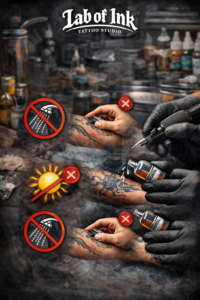
Getting a tattoo is more than just a moment in the chair. It is a long-term investment in your appearance and personal expression. While choosing the right design and artist is essential, what happens after your appointment plays an equally important role in the final result.
A fresh tattoo is essentially a controlled wound. How you care for it during the healing process will determine how sharp, vibrant, and long-lasting your ink remains. Poor aftercare can lead to fading, patchiness, infection, or even permanent damage to the design.
At Lab of Ink, we emphasise that healing is not an afterthought. It is a critical stage of the tattoo process. To help you protect your investment, here are the most common tattoo aftercare mistakes and how to avoid them.
Why Tattoo Aftercare Matters
The healing phase is when your skin regenerates and locks in the pigment placed during your session. During this time, your tattoo is vulnerable to bacteria, irritation, and environmental damage.
Proper tattoo aftercare ensures:
Strong pigment retention
Clean, even healing
Reduced risk of infection
Long-term clarity and detail
Neglecting this stage can undo even the best work done by a professional artist.
1. Over-Moisturising Your Tattoo
Moisturising is essential, but more is not better.
The Mistake
Applying thick layers of ointment or lotion several times a day.
Why It Is a Problem
Excess moisture suffocates the skin. This can clog pores, soften scabs prematurely, and create an environment where bacteria thrive. It may also cause raised or uneven healing.
The Right Approach
Use a thin layer of fragrance-free moisturiser. Your skin should feel hydrated but not greasy. If your tattoo looks shiny, you have applied too much.
2. Exposing Your Tattoo to Direct Sunlight
Sun exposure is one of the fastest ways to damage a healing tattoo.
The Mistake
Allowing your tattoo to be exposed to sunlight during the first few weeks or applying sunscreen too early.
Why It Is a Problem
Ultraviolet rays break down tattoo pigment and can cause fading before the tattoo has even healed. Fresh tattoos are also more sensitive, increasing the risk of irritation and scarring.
The Right Approach
Keep your tattoo covered with loose, breathable clothing for at least two weeks. Avoid sunscreen until the skin has fully healed. Once healed, daily SPF use is essential to maintain vibrancy.
3. Soaking Your Tattoo in Water
Water exposure is often underestimated, but it can significantly affect healing.
The Mistake
Swimming in pools, the ocean, or soaking in baths and hot tubs.
Why It Is a Problem
Prolonged exposure to water softens scabs and can cause them to fall off prematurely. This often results in ink loss and uneven patches. Pools and natural bodies of water also introduce bacteria and chemicals that can lead to infection.
The Right Approach
Stick to short, lukewarm showers. Avoid soaking your tattoo until all peeling and scabbing have naturally completed.
4. Picking or Scratching the Tattoo
Itching and flaking are natural parts of the healing process.
The Mistake
Scratching, picking, or peeling scabs and flakes.
Why It Is a Problem
Removing scabs prematurely can pull pigment from the skin, leaving gaps in the design. It also increases the risk of scarring, which can permanently distort the tattoo.
The Right Approach
Allow your skin to shed naturally. If itching becomes uncomfortable, apply a light layer of moisturiser or gently tap the area instead of scratching.
5. Using Harsh or Incorrect Products
Not all skincare products are suitable for tattoo healing.
The Mistake
Using alcohol-based cleansers, hydrogen peroxide, heavily scented soaps, or antibiotic creams.
Why It Is a Problem
These products can damage new skin cells, slow healing, and cause irritation or allergic reactions. Some antibiotic creams can even affect pigment retention.
The Right Approach
Use a mild, unscented soap for cleaning and a tattoo-safe moisturiser recommended by your artist.
Tattoo Aftercare Routine: Step-by-Step
Following a consistent routine will help your tattoo heal properly:
Wash your hands before touching your tattoo
Clean gently with unscented soap 2 to 3 times daily
Pat dry with a clean paper towel
Apply a thin layer of moisturiser
Avoid friction, sun exposure, and soaking
Consistency is key. Skipping steps or overdoing products can both lead to complications.
Signs of Improper Healing or Infection
Some redness and sensitivity are normal during the first few days. However, certain symptoms may indicate a problem:
Spreading redness beyond the tattoo area
Persistent swelling after several days
Yellow or green discharge
Excessive heat or throbbing pain
Fever or chills
If you notice any of these signs, seek professional advice immediately.
How Long Does a Tattoo Take to Heal
Tattoo healing happens in stages:
Days 1 to 3: Redness, swelling, and sensitivity
Days 3 to 7: Peeling and flaking begin
Weeks 2 to 3: Surface healing completes
Weeks 4 to 6: Deeper layers fully recover
Even when your tattoo looks healed on the surface, your skin may still be repairing underneath.
The Lab of Ink Commitment to Quality
At Lab of Ink, we believe that a great tattoo is a combination of expert artistry and proper aftercare.
We ensure every client receives:
Clear aftercare instructions
Professional product recommendations
Ongoing support during healing
Our goal is to make sure your tattoo looks just as good years from now as it does on day one.
Frequently Asked Questions
Can I exercise after getting a tattoo?
Avoid intense physical activity for at least 48 hours. Sweat and friction can irritate the area.
When can I go swimming again?
Wait until your tattoo is fully healed, typically 2 to 3 weeks.
Why does my tattoo look dull while healing?
A thin layer of skin forms over the tattoo during healing, which temporarily reduces vibrancy.
Is peeling normal?
Yes. Peeling is part of the healing process. Do not interfere with it.