Tattoo Healing Stages Explained: What to Expect and How to Care for Your Ink
LOT 20260320 · NO 32/43 · 949 WORDS · 4 MIN
The surface closes in two to four weeks and most tattoos look settled by six. The skin underneath keeps rebuilding for months, up to a year per Healthline.
What the skin does, day by day
Typical, not a scheduleWeeks after the tattoo
- Days 1 to 2
- Days 3 to 6
- Days 7 to 14
- Days 14 to 21
- Weeks 3 to 6
- After 6 weeks
| When | What the skin does | What you do |
|---|---|---|
| Days 1 to 2 | Red, swollen and warm. It weeps plasma and ink, which looks alarming and is not. | Leave the covering on as long as the artist said. After that, wash gently twice a day and pat dry. |
| Days 3 to 6 | The surface tightens and starts to flake. The colour looks cloudy and duller than it did. | Keep washing. A thin layer of unscented ointment, not a thick one, which traps moisture. |
| Days 7 to 14 | Peeling in earnest, like sunburn, and the itching starts. Flakes come away carrying ink colour. | Do not pick and do not scratch. Slap it if you must. Picking a flake early takes pigment with it. |
| Days 14 to 21 | The surface has closed. It can look shiny, waxy or slightly milky over the design. | Moisturise, and keep it out of the sun. That milky look is normal and passes. |
| Weeks 3 to 6 | The skin underneath is still rebuilding even though the surface looks finished. | No soaking, no swimming, no sauna. Sunscreen once it has fully closed. |
| After 6 weeks | Looks healed, and this is when a touch up can be judged. The skin underneath keeps rebuilding for months: several months by a Cleveland Clinic dermatologist's account, up to a year by Healthline's. | Sunscreen for the rest of its life. That is the single thing that decides how it ages. |
When it is not normal healing
- Spreading redness that gets worse after day three rather than better.
- Heat, swelling or pain that increases instead of settling.
- Thick yellow or green discharge, as opposed to the clear plasma of the first two days.
- A fever.
Healing is itchy, flaky and ugly in the middle, and that is the normal version. The four above are the ones that are not, and they are a reason to see a doctor rather than to read another guide. This page cannot tell you which you have.
The phases people ask about
- How long does a tattoo take to fully heal?
- The surface closes in about two to four weeks and most tattoos look settled by six. Fully healed takes longer, because the skin underneath keeps rebuilding for months. Healthline, in a medically reviewed article updated 20 March 2026, puts it at up to a year. A Cleveland Clinic dermatologist, writing on 20 March 2026, says several months, and longer for large pieces. Small tattoos on the arm or wrist are usually quicker than a chest or back piece.
- What are the three stages of tattoo healing?
- Healthcare writers usually describe three. Inflammation, roughly the first ten days: redness, swelling, weeping and the first flaking. Tissue formation, from the first days to about three months: the peeling, itching and milky phases while the surface closes. Remodelling, from about three months to a year: the deeper skin reorganises and the colour settles. The ranges are Healthline's, updated 20 March 2026, and the day-by-day table above sits inside the first two.
- How long does the itchy phase of a tattoo last?
- It usually starts toward the end of the first week, is at its worst in the second, and has mostly settled by the end of the third. Large or heavily shaded pieces itch for longer than small line work. Slap or press it rather than scratching, and keep it lightly moisturised, because dry skin itches more.
- How long does the milky or cloudy phase last?
- The milky look arrives once the peeling has finished, around weeks two to three, and is a thin new layer of skin sitting over the ink. It normally clears over the following week or two and the design looks sharp again by four to six weeks. If it is still cloudy after six weeks, show your artist.
- How do I know my tattoo is healing properly?
- Each week it should look calmer than the week before: less red, less swollen, less sore. Flaking, itching and a dull or milky look are all the surface closing, which is what you want. What is not normal is the list above: redness that spreads after day three, heat or pain that increases, thick yellow or green discharge, or a fever.
- Should I moisturise a tattoo while it is peeling?
- Yes, thinly, two or three times a day with an unscented lotion, rubbed in until the skin no longer looks wet. Let the flakes come away on their own. Pulling one off early can take ink with it.
- How do I know if a tattoo is over-moisturised?
- It stays shiny and wet long after you put the lotion on, the skin goes soft or pale, small spots or bumps appear, or the scabs turn gummy instead of drying. Wash it gently, pat it dry, give it some air, and use less from then on.
- What helps a tattoo heal faster?
- Nothing makes skin heal faster than its own schedule. What you control is not slowing it down: keep it clean, keep the moisturiser thin, stay out of pools, the sea and the sun, do not pick, and wear loose clothes over it. Most slow heals come from doing too much to it rather than too little.
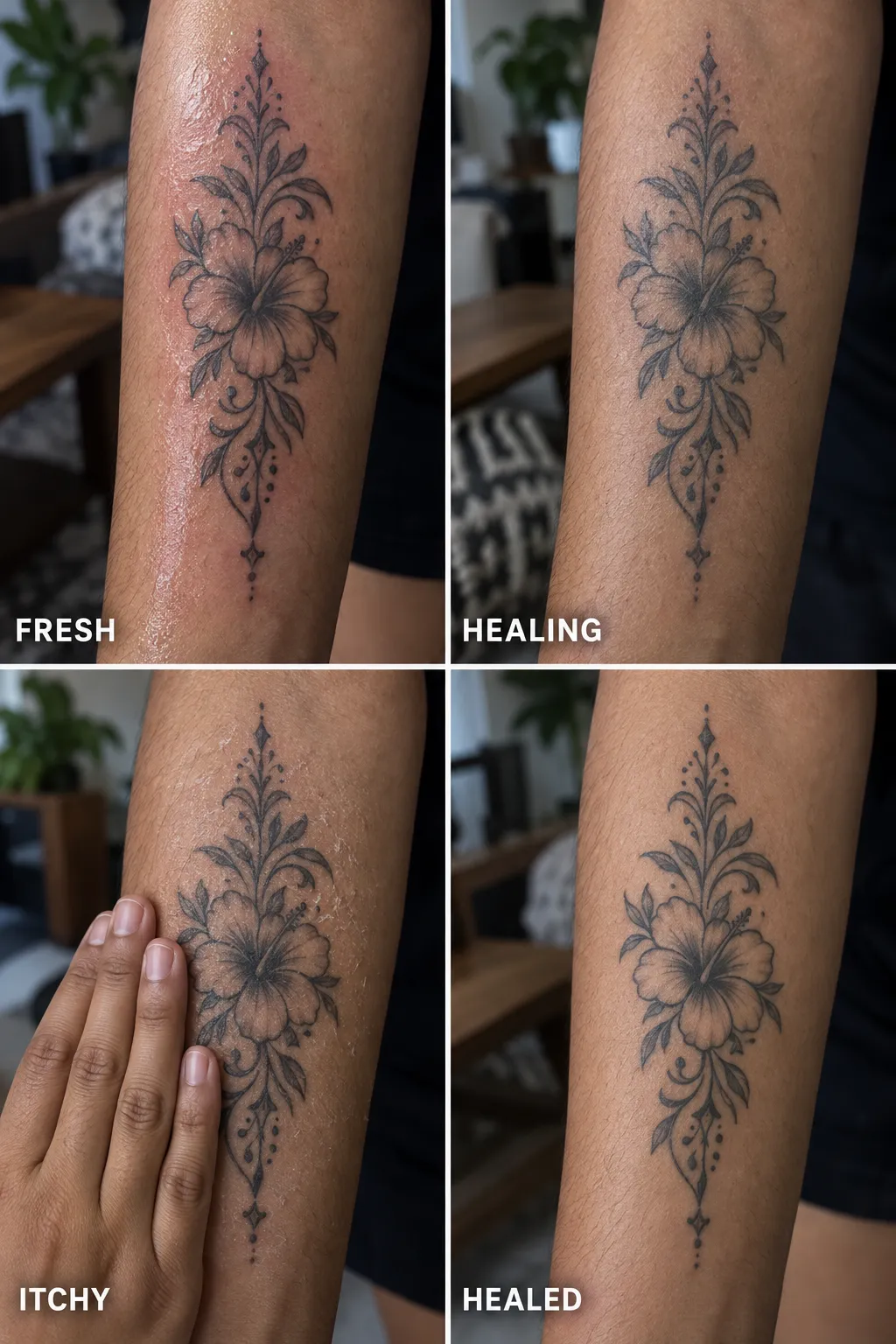
After the Session
Getting a tattoo is an exciting experience, but the process does not end when you leave the studio. Healing is a crucial phase that determines how your tattoo will look long-term. Understanding the tattoo healing stages helps you take the right steps at the right time, ensuring your ink heals cleanly and retains its detail.
A properly healed tattoo should look vibrant, smooth, and well-defined. Poor healing, on the other hand, can lead to fading, patchiness, or infection.
At Lab of Ink, we guide every client through the healing journey. This article explains exactly what happens after you get tattooed and how to care for your skin during each stage.
Why Understanding Tattoo Healing Stages Matters
Tattoo healing is not a one-step process. Your skin goes through multiple phases as it repairs itself and locks in the pigment.
Knowing what to expect helps you:
- Avoid unnecessary worry during normal healing
- Prevent common aftercare mistakes
- Protect your tattoo from damage
- Ensure long-lasting results
Each stage requires slightly different care, and understanding these changes makes a significant difference.
Stage 1: Fresh Tattoo (Days 1 to 3)
This is the most sensitive stage of healing.
What Happens
- Redness and swelling around the tattoo
- Mild bleeding or oozing of plasma and ink
- Skin feels sore and warm
Your tattoo is essentially an open wound at this point.
How to Care for It
- Keep the bandage on for the time recommended by your artist
- Wash gently with mild, unscented soap
- Pat dry with a clean paper towel
- Apply a thin layer of aftercare ointment
What to Avoid
- Touching the tattoo with unwashed hands
- Excessive movement or friction
- Exposure to dirt or bacteria
This stage is all about protecting the tattoo from infection.
Stage 2: Scabbing and Peeling (Days 3 to 7)
As your skin begins to repair, you will notice visible changes.
What Happens
- Light scabbing may form
- Peeling begins, similar to sunburn
- Itching becomes more noticeable
This stage can be uncomfortable but is completely normal.
How to Care for It
- Continue gentle cleaning 2 to 3 times daily
- Apply a light layer of moisturiser
- Keep the tattoo clean and dry
What to Avoid
- Scratching or picking at scabs
- Over-moisturising
- Tight clothing that causes friction
Removing scabs prematurely can pull ink from the skin and affect the final result.
Stage 3: Dry and Itchy Phase (Weeks 2 to 3)
At this stage, your tattoo may look less vibrant temporarily.
What Happens
- Skin appears dry and slightly dull
- Itching continues but becomes more manageable
- Most visible peeling has finished
A thin layer of new skin is forming over the tattoo.
How to Care for It
- Continue moisturising regularly
- Stay hydrated to support skin repair
- Keep the area protected from irritation
What to Avoid
- Ignoring dryness
- Exposing the tattoo to direct sunlight
- Using harsh skincare products
This stage requires patience, as your tattoo may not look fully settled yet.
Stage 4: Final Healing (Weeks 4 to 6)
The deeper layers of skin complete the healing process.
What Happens
- Skin texture returns to normal
- Colours and details become clearer
- The tattoo regains vibrancy
Although the tattoo may look healed earlier, full healing takes time beneath the surface.
How to Care for It
- Continue basic skincare and hydration
- Start using sunscreen to protect the tattoo
- Maintain healthy skin habits
Proper care during this stage ensures long-term quality.
What Is Normal During Tattoo Healing
It is important to recognise normal healing signs:
- Mild redness in the first few days
- Peeling and flaking
- Itching
- Slight dullness before full clarity returns
These are all part of the natural healing process.
Signs Something May Be Wrong
While most tattoos heal without issues, watch for warning signs:
- Spreading redness beyond the tattoo
- Thick or coloured discharge
- Severe swelling or pain
- Fever or chills
If you notice any of these symptoms, seek professional advice immediately.
How Aftercare Changes Throughout Healing
Your aftercare routine should adapt as your tattoo heals.
Early Stage
- Focus on cleanliness and protection
Middle Stage
- Manage peeling and hydration
Final Stage
- Maintain moisture and protect from sun exposure
Adjusting your care ensures optimal healing at every stage.
Common Mistakes During Healing
Avoid these common errors:
- Picking or scratching the tattoo
- Applying too much moisturiser
- Using harsh or scented products
- Exposing the tattoo to sun too early
- Soaking the tattoo in water
Even small mistakes can impact the final appearance.
How Long Does a Tattoo Take to Fully Heal
While surface healing usually takes 2 to 3 weeks, full healing can take up to 6 weeks or longer depending on:
- Tattoo size
- Placement
- Skin type
- Aftercare consistency
Patience is essential for the best results.
Tips for Faster and Better Healing
To support your skin during healing:
- Stay hydrated
- Eat a balanced diet
- Avoid alcohol in excess during early healing
- Wear loose, breathable clothing
- Follow your artist’s instructions carefully
These habits promote healthier skin and better outcomes.
The Lab of Ink Healing Approach
At Lab of Ink, we prioritise both artistry and aftercare.
We ensure every client receives:
- Clear guidance for each healing stage
- Professional product recommendations
- Support throughout the healing process
Our goal is to help your tattoo heal perfectly and maintain its quality over time.
Frequently Asked Questions
Common questions
- Is it normal for my tattoo to peel?
- Yes. Peeling is a natural part of the healing process and usually begins within the first week.
- Why does my tattoo look dull while healing?
- A layer of new skin forms over the tattoo, temporarily reducing vibrancy.
- When can I go back to normal activities?
- Light activities are fine after a few days, but avoid intense exercise and soaking for at least 2 weeks.
- Do all tattoos heal the same way?
- Healing can vary depending on size, placement, and individual skin type.
Related guides
If you are in Luzon
The same artist who wrote none of the above runs a home tattoo service across Luzon: he brings the whole setup to your house and the kit stays sealed until it is opened in front of you. He covers Olongapo, Subic, Castillejos, San Marcelino, Bataan and Pampanga.
An enquiry that names the design idea, the placement, a rough size in centimetres and your town gets a proper answer. Transport is yours to pay on top of the tattoo, worked out from the distance and quoted with it.