Tattoo Scabbing and Peeling: What Is Normal, and What Is Not
LOT 20261013 · NO 35/43 · 1219 WORDS · 6 MIN
Peeling starts near the end of the first week and is mostly over by the end of the second. Light, flat scabs are normal; thick ones that crack or weep are not.
When to stop reading and see a doctor
Read before the articleSee a doctor if you get
- Redness that spreads after day three instead of settling
- Heat, swelling or pain that increases instead of easing
- Thick yellow or green discharge, not the clear fluid of the first two days
- A fever
Healing is itchy, flaky and ugly in the middle, and that is the normal version. The four above are not, and they are a reason to see a doctor rather than to read another guide. This page cannot tell you which you have.
Why a tattoo scabs and peels at all
A tattoo is thousands of small punctures in the top layers of the skin, with ink left in the layer below. For the first couple of weeks your body handles it like any other graze. It closes the surface, and the damaged top layer dries and comes away. That coming away is the peeling and the scabbing. Underneath, the new surface is already in place and the ink sits below it.
So both are a sign the skin is doing its job. The question people actually ask is how much is too much, and when it should stop. The answers below are typical ranges. The person, the placement, the size of the piece and how it was done all move them, and your own artist saw your tattoo and this page did not.
Nothing here is medical advice. Where a figure comes from a medical source, it says which one.
What normal looks like, week by week
Days one to three. The tattoo is open, tender and a little swollen. It may ooze clear fluid and some ink for the first day or two. No peeling yet.
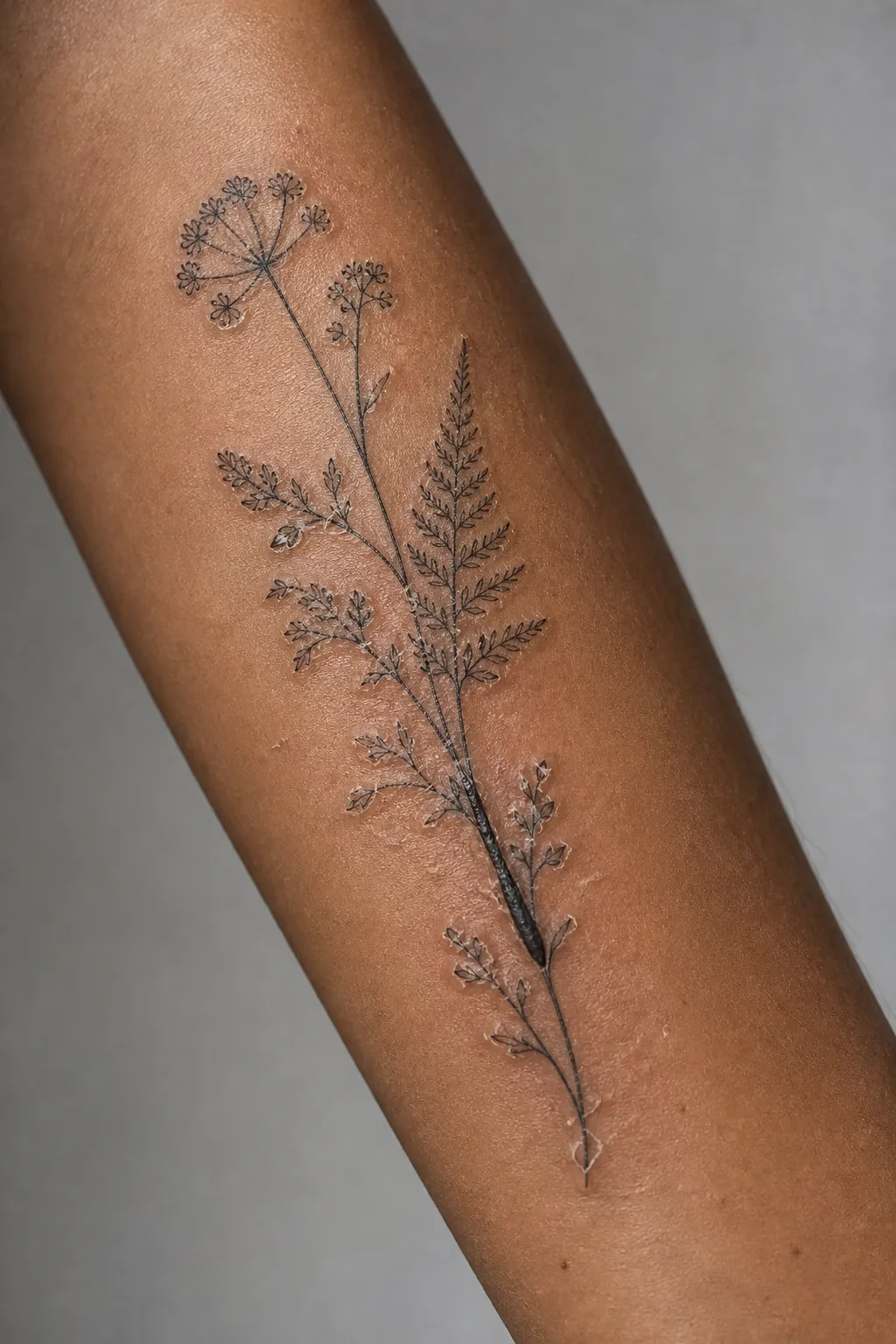
Days three to seven. The surface starts to dry and tighten. Thin, flat scabs can form over the darkest lines and any solid black or colour. The edges start to flake. Healthline’s medically reviewed article on tattoo peeling puts the start “by the end of the first week” and says scabs may come off on their own into the second week.
Week two. The main peeling week. Flakes come off in small coloured pieces, which is ink that was sitting in the dead top layer. It looks alarming the first time and it is expected. The itching is usually worst now.
Weeks three and four. Most visible peeling is over. The tattoo can look cloudy, dull or shiny, because a thin layer of new skin sits over it. This is the silver skin stage.
After that. The surface is closed, but the skin underneath keeps rebuilding for months. Healthline, in a separate article updated 20 March 2026, puts the deeper healing at up to a year. The healing stages guide walks through that longer stretch.
Light scabbing and heavy scabbing are not the same
Light scabs are thin, flat and the same colour as the tattoo under them. They form where the artist worked the skin hardest, so heavy black, bold outlines and packed colour scab more than fine line work. Left alone, they shrink and come away in the second week.
Heavy scabs are thick, raised and often darker or yellowish. They crack when you move, and the crack can bleed or weep. They usually mean the skin was worked very hard, the tattoo was kept too wet or too dry, or it was rubbed by clothing or a bag strap. A heavy scab is more likely to take ink with it when it comes off, which leaves a light patch that may need a touch-up later.
Heavy scabbing on its own is something to show your artist. Heavy scabbing with spreading redness, growing heat or pain, thick yellow or green discharge, or a fever is a reason to see a doctor. The four signs are listed at the top of this page.
When peeling is not normal
Healthline and Medical News Today, both in articles medically reviewed by the same nurse practitioner, list the same few warning signs around peeling:
- Oozing that goes on past the first couple of days, or starts again later, which can mean infection.
- Peeling with heat, swelling and spreading redness, rather than settling pink skin.
- Itching that is severe rather than annoying, which can mean infection, inflammation or an allergic reaction to the ink.
- Red or blotchy patches on the tattoo, which can be an allergic reaction to the ink.
- Peeling that is still going after a month or two, which Healthline says is worth seeing a dermatologist about.
None of these is common, and none of them is something to wait out with a different cream. They are the point where a page like this one stops being useful.
What to do while it peels
- Leave it. Do not pull flakes off, even the ones hanging by a corner. A flake still attached is still holding ink.
- Do not scratch. If it itches, tap it with a clean, flat hand, or put on a thin layer of the moisturiser your artist told you to use. Cold helps too.
- Keep washing it. Gently, with unscented soap and lukewarm water, then pat dry with a clean paper towel. A flake that comes off while you wash was ready.
- Thin layers only. Too much ointment or lotion softens scabs and can make them come away early. The aftercare guide has the routine.
- No soaking. Pools, the sea, baths and long showers soften scabs the same way. The swimming guide has the waits.
- Loose, clean clothes over it. Rubbing is what turns a light scab into a heavy one.
- Out of the sun. Peeling skin burns easily and so does the new skin under it.
Heat, sweat and aircon
Most guides on this are written for cooler, drier places. Here the two things that most often make peeling worse are sweat and air conditioning.
Sweat that sits on a healing tattoo keeps it damp, which softens scabs, and it carries whatever is on your skin with it. On a hot day, rinse it off gently and pat dry instead of leaving it.
A night in an air-conditioned room dries the skin out, and a tattoo that dries too far cracks along its scabs. If you wake up tight and itchy, a thin layer of your aftercare moisturiser in the morning is usually enough. A lot of it is not better.
Dry healing
Dry healing means no ointment or lotion at all, only washing and patting dry. Some artists swear by it, mostly because it makes over-moisturising impossible. Most medical advice, including both articles above, says to keep a healing tattoo moisturised.
There is no settled answer, and it is not worth arguing with your artist about. They chose a method for the way they work and the skin they worked on. Follow it, and if your tattoo starts to crack and bleed along its scabs, tell them, because that is the usual sign a dry heal needs a little help.
After the peeling stops
When the flakes are gone, the tattoo can look faded or patchy. Give it time. The cloudiness clears over a few weeks as the new skin settles. A patch where a scab came away early may stay lighter, and that is what a touch-up is for. Most artists want to see it at around six weeks, once it has settled, rather than the week after it stops peeling.
Sources
- Healthline, Tattoo peeling: is it normal, or is something wrong?, medically reviewed by Cynthia Cobb, DNP, APRN.
- Medical News Today, Tattoo peeling, medically reviewed by Cynthia Cobb, DNP, APRN, updated 12 May 2026.
- Healthline, How long does it take a tattoo to heal?, medically reviewed by Carissa Stephens, RN, updated 20 March 2026.
Common questions
- When does a tattoo start peeling?
- Usually somewhere between day three and the end of the first week. It peels like a light sunburn, mostly over the darkest and most worked parts, and for most placements it is finished by the end of the second week. A hand or a foot can run a week or so behind.
- Is it normal for a tattoo to scab?
- Light scabbing is normal, especially over heavy black and solid colour. Thin scabs that sit flat and come away on their own are part of healing. Thick, raised scabs that crack, or scabs that keep weeping, are worth showing to your artist, and with heat, spreading redness or a fever, to a doctor.
- Is it bad if my tattoo is not peeling?
- No. Some tattoos barely peel, and fine line work often flakes so little you hardly notice. Healthline's article on tattoo peeling, medically reviewed, says the same: a tattoo that does not peel is not necessarily a sign that anything is wrong.
- Why does my tattoo look cloudy or shiny after it peels?
- That is the new skin over it, and it often looks dull, milky or slightly shiny for a few weeks. Artists call it the silver skin stage. It clears as the skin settles, and a tattoo is best judged for touch-ups after about six weeks, not straight after peeling.
- Can I scratch a peeling tattoo if it itches?
- No. Scratching and picking pull off flakes and scabs that are still holding ink, and they open the skin to infection. Tap it gently with a clean flat hand, or put on a thin layer of the moisturiser your artist told you to use.
- What is dry healing a tattoo?
- Healing without any ointment or lotion, only washing and patting dry. Some artists prefer it. Most medical advice, including Healthline's, says to moisturise a healing tattoo. Follow the method your own artist gave you, because they know what they put in your skin.
Related guides
If you are in Luzon
The same artist who wrote none of the above runs a home tattoo service across Luzon: he brings the whole setup to your house and the kit stays sealed until it is opened in front of you. He covers Olongapo, Subic, Castillejos, San Marcelino, Bataan and Pampanga.
An enquiry that names the design idea, the placement, a rough size in centimetres and your town gets a proper answer. Transport is yours to pay on top of the tattoo, worked out from the distance and quoted with it.