Filipino Tattoo Designs, and the Ones That Are Not Ours to Give
LOT 20260924 · NO 13/43 · 1190 WORDS · 5 MIN
The question underneath this one is who a design belongs to
People arrive at Filipino designs from two directions. Some grew up here and want something that says so. Some grew up abroad and are trying to find their way back to a place they half remember. Both ask the same question when they get close, and it is a good question: is this mine to wear, and is it yours to give me?
This page answers the second half honestly, which means most of it is about what this artist will not do. That is the wrong order for selling and the right order for telling you the truth, so it is the order it is in.
What Filipino tattooing actually is
The practice is old and it is not one thing. Batok is the Kalinga name; across the islands the same practice goes by batek, patik, batik and buri, among others, which is itself the point: this is many communities and not a single national style.
It is hand-tapped. A thorn from a pomelo or citrus branch is lashed to a bamboo stick, dipped in an ink of charcoal and water, and tapped into the skin with a second stick. The designs were repeating geometrics, stylised animals, plants, and lightning, mountains, water, stars and sun. Each motif had a name and usually a story, and the marks recorded who somebody was: their community, their kin, what they had done and what they had survived.
That is the part that matters for everything below. These were not decoration. They were a record, and the right to wear a particular mark was something a person earned inside a particular community.
Apo Whang-od of the Butbut tribe in Buscalan, Kalinga, is the best known living practitioner, and the National Commission for Culture and the Arts gave her the Dangal ng Haraya Award for Intangible Cultural Heritage in 2018.
What this artist will not do
Not batok. Batok is hand-tapped by a mambabatok inside a living tradition, and doing the look with a machine is not the same thing wearing the same name. If you want batok, go to a Kalinga mambabatok. That is not a modest disclaimer, it is the actual advice.
Not the three dots. Apo Whang-od’s signature is three dots, standing for her and her first two apprentices, her niece Grace Palicas and grandniece Elyang Wigan. It is a signature. Copying another artist’s signature is passing off, which needs no law to be wrong, and there is no law here anyway: tattoo copyright has almost no precedent and the question was still being argued by intellectual property lawyers in Manila in late 2024. The reason this artist will not ink them is simpler than a statute. They are hers.
Not Kalinga-inspired patterns. This is the one people expect a studio to say yes to, and it is the one with a government agency already on the record. In January 2021 the National Commission on Indigenous Peoples intervened over the unauthorised commercial release of tattoo designs made by Apo Whang-od. Selling a community’s marks as a style option is the thing that intervention was about.
Not a design sold as authentic when it is not. If a pattern is drawn here, it was drawn here, and the page will say so rather than lending it a heritage it does not have.
What he does make
All of it is his own drawing. None of it is a copy of any community’s marks, and none of it is sold as traditional.
Baybayin. The pre-colonial script, usually a word, a name or a short line. This is the most asked for and the easiest to get wrong, which is why it has its own section below.
The Philippine sun and its three stars. Eight rays for the eight provinces that first rose in 1896, three stars for Luzon, the Visayas and Mindanao. A national symbol rather than any community’s private mark, which is exactly why it can be drawn without anybody’s permission.
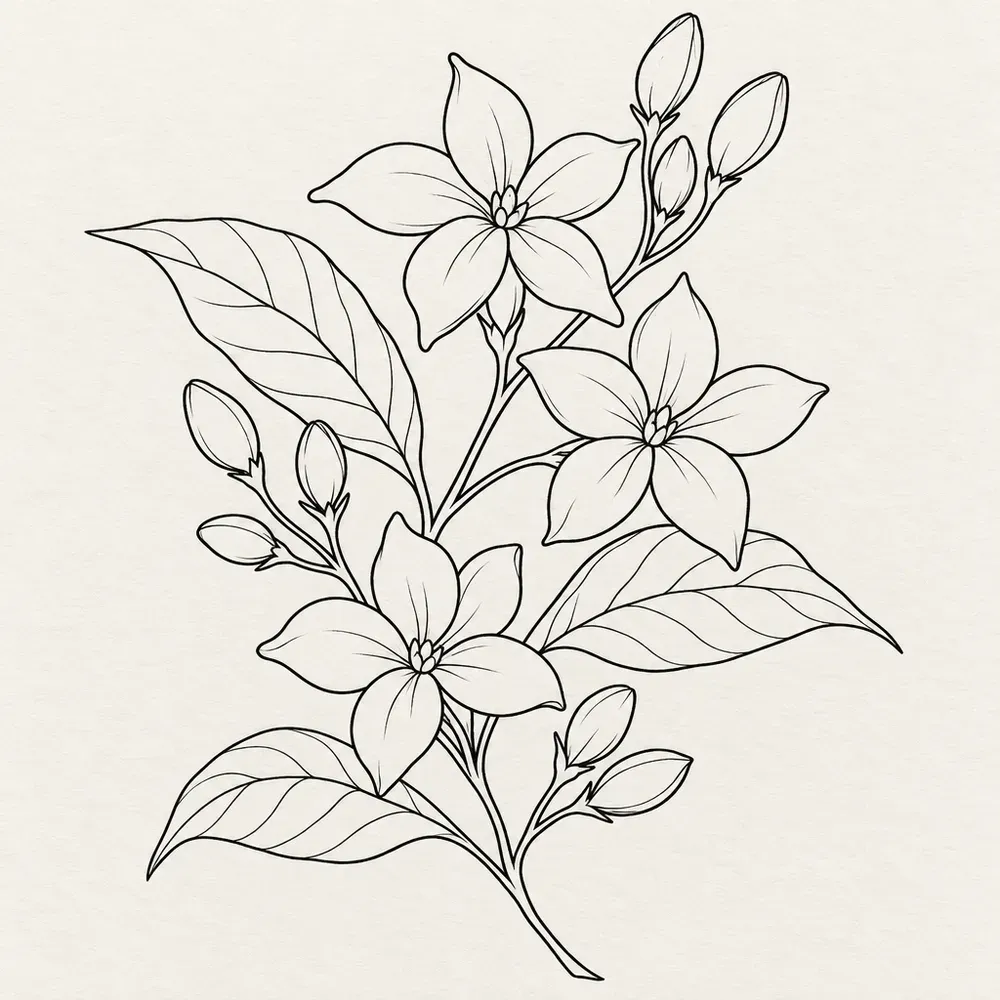
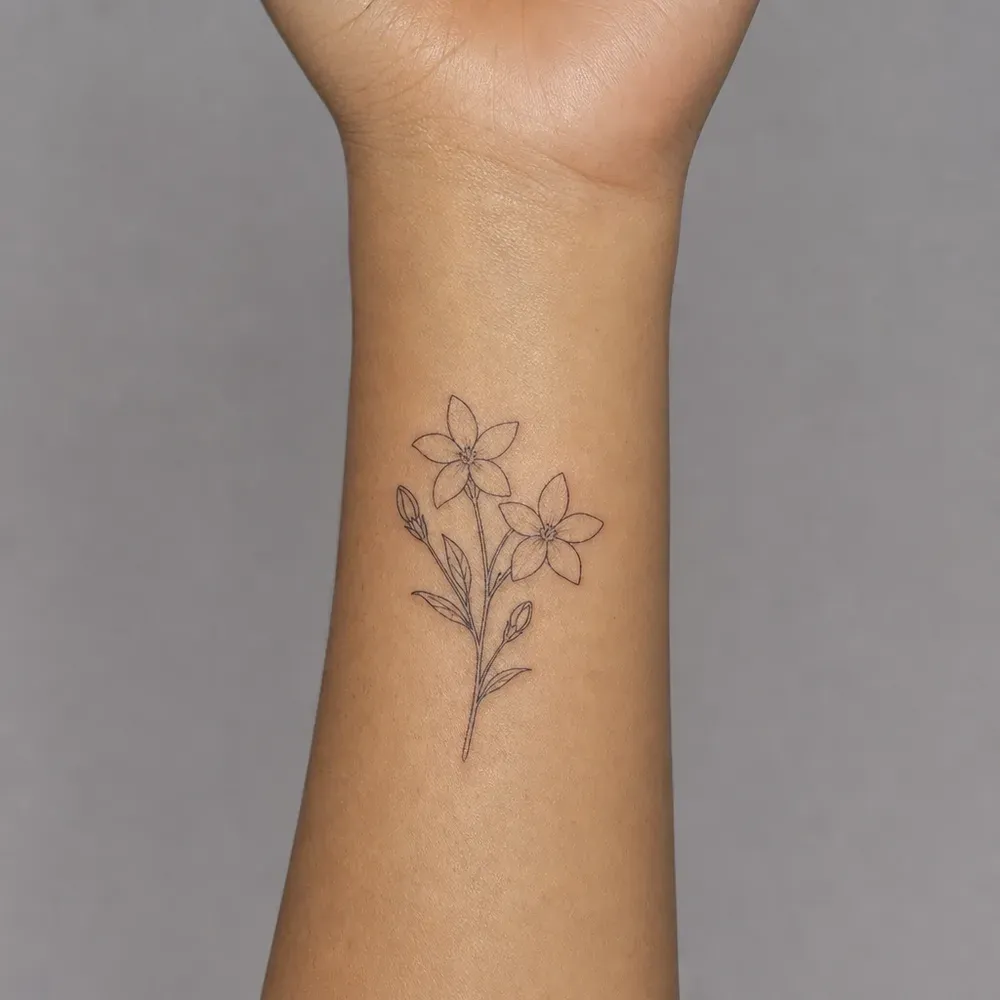
Sampaguita. The national flower, small and white and usually strung. It reads well in fine line and it holds up as a small piece, which not every flower does.
The Philippine eagle. Large, detailed, and honest about what it costs in time and in skin. It wants a forearm or a back rather than a wrist.
Line work drawn for you. Repeating geometric work in his own hand. People call this Filipino tribal; the patterns behind that phrase come from batok and belong to the communities that made them, so what is offered here is a geometric style of his own and is described that way.
Why a misspelt baybayin tattoo is so common
This is the part worth reading twice, because the mistake is permanent and it is usually made before anybody gets near a needle.
Baybayin is not an alphabet. It is an abugida, which means each character is a consonant that already carries a vowel, normally an a. Ba is one character. To make it bi or bu you add a small mark, a kudlit, above or below. There is no character that means a bare b.
That is where it goes wrong. In the old writing, final consonants were simply dropped: a name written the historical way loses its last sound. The mark that lets you write a bare consonant, the cross-shaped kudlit, was added under Spanish influence centuries later, so it is genuinely later than the script itself and not everyone accepts it.
So there are two defensible ways to write most names, and one way that is wrong: taking an English word and swapping each Latin letter for a baybayin character that looks like it corresponds. That produces a string of syllables that is not the name, and it is what a great many baybayin tattoos on the internet actually say.
There is a second trap. Baybayin writes Tagalog. Names and words that are not Tagalog, and English words in particular, do not always have a clean transliteration, and anybody who tells you every word does is guessing.
Send the word and it comes back checked. Put the word or the name in your enquiry and you get the transliteration back before anything is drawn, with what it says and which of the two conventions it uses. If it does not go into baybayin cleanly, that is what comes back, rather than a version of it that does.
If you are the person from that thread
There is a question that turns up on Filipino tattoo forums constantly, usually from someone raised abroad: which of these designs are actually Filipino, and am I allowed to wear one.
The short answer is that the national symbols are yours, the script is yours, and the community marks belong to the communities that carry them and are worth travelling for rather than ordering. Nobody needs to earn a sampaguita. The sun on the flag is on the flag.
That distinction is the whole page, and it is the reason this one is worth reading before you book anything, here or anywhere.
Sampaguita, the flower this page argues for, drawn and on skin.
Common questions
- Can you do a batok or Kalinga tattoo?
- No. Batok is hand-tapped with a thorn on a bamboo stick by a mambabatok inside a living tradition, and doing the look with a machine is not that thing. If you want batok, go to a Kalinga mambabatok. What this artist offers is his own work.
- Can I get Apo Whang-od's three dots from you?
- No. Those three dots are her signature and her line's, standing for her and her two apprentices, and copying another artist's signature is passing off. Nobody else can give them to you either, whatever they charge.
- What Filipino designs can you actually tattoo?
- Baybayin script, the Philippine sun and its three stars, sampaguita, the Philippine eagle, and line work drawn for you. All of it is his own drawing rather than a copy of any community's marks.
- How do I make sure my baybayin tattoo is spelt right?
- Send the word or name in the enquiry and the transliteration is checked before anything is drawn. Baybayin is not an alphabet with one letter per English letter, so a word rendered letter by letter usually comes out as something else.
- Is a Filipino tribal tattoo the same as batok?
- The patterns people call Filipino tribal come from batok and belong to the communities that made them. A studio can draw in a geometric style of its own, and should say that is what it is doing rather than call it tribal.
Related guides
If you are in Luzon
The same artist who wrote none of the above runs a home tattoo service across Luzon: he brings the whole setup to your house and the kit stays sealed until it is opened in front of you. He covers Olongapo, Subic, Castillejos, San Marcelino, Bataan and Pampanga.
An enquiry that names the design idea, the placement, a rough size in centimetres and your town gets a proper answer. Transport is yours to pay on top of the tattoo, worked out from the distance and quoted with it.