Tattoo Pain Chart: Where It Hurts Most, and Why
LOT 20260923 · NO 34/43 · 1357 WORDS · 6 MIN
Ribs, sternum, spine, knees, elbows, hands and feet hurt most. Outer arm and outer thigh hurt least. How long you sit moves the number more than the spot.
The tattoo pain chart, front and back
Every placement on one scale
Where people put it, one to ten
- Outer thigh 2 to 3
- Outer upper arm 2 to 4
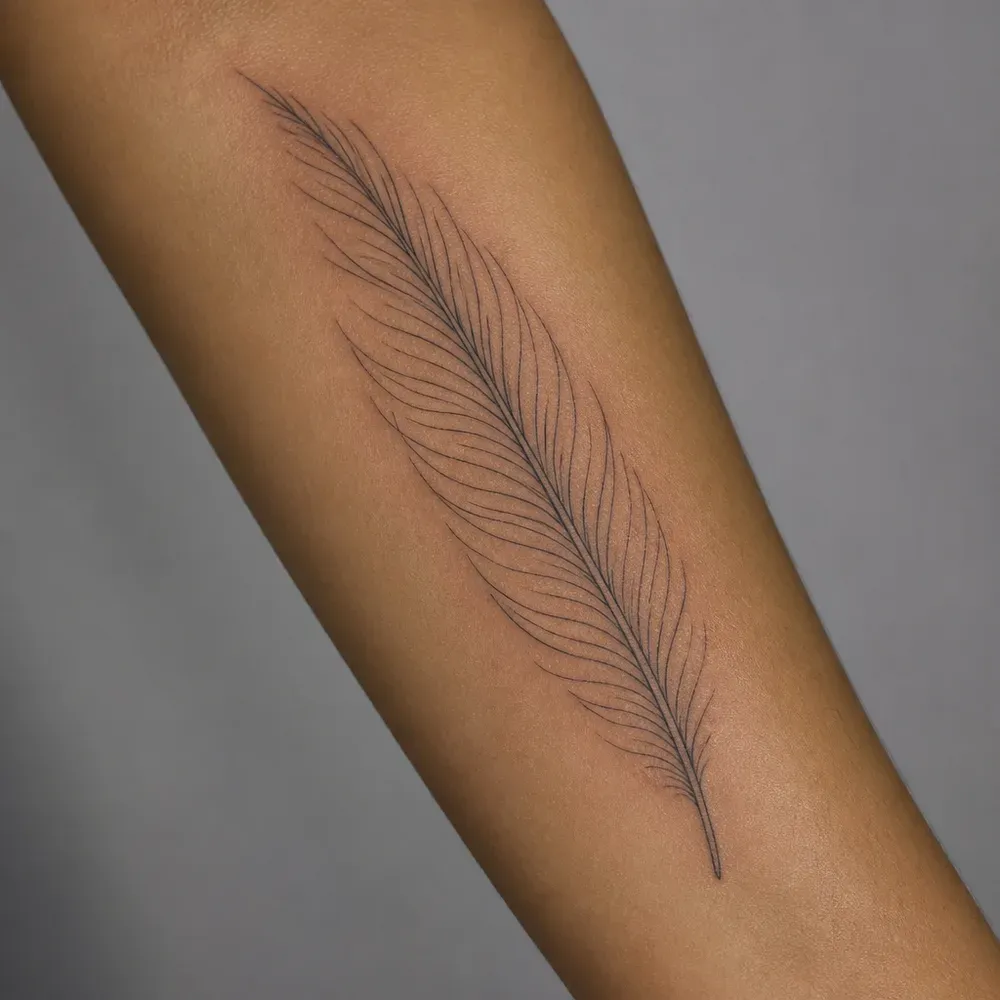
- Forearm, outer 3 to 4
- Calf 3 to 5
- Upper back, shoulder blade 3 to 5
- Inner arm, inner thigh 5 to 6
- Lower back 5 to 6
- Stomach 5 to 7
- Neck, throat 6 to 8
- Hands and fingers 7 to 8
- Feet and ankles 7 to 9
- Elbows and knees 8 to 9
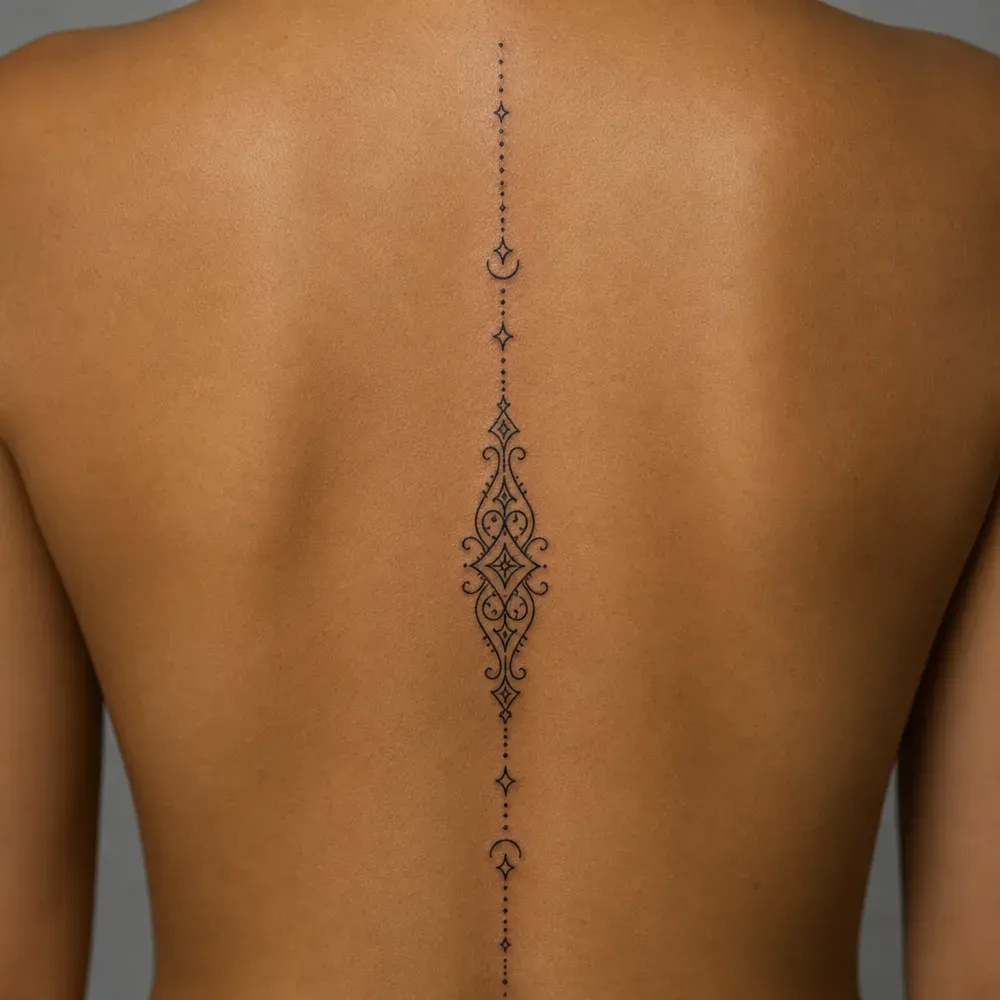
- Spine 8 to 9
- Sternum and ribs 8 to 10
Nobody has measured this, including us
Every tattoo pain chart you will find, this one included, is a summary of what artists and clients report. There is no instrument behind any of them. Pain is subjective, it moves with sleep, food, mood and how the day has gone, and two people with the same tattoo in the same place will give you two different numbers.
What the ordering below is actually tracking is anatomy, and anatomy does not vary much. Thin skin over bone hurts. Dense nerve endings hurt. Somewhere with muscle or fat between the needle and the bone hurts less. That is the whole mechanism, and it is why the chart looks roughly the same wherever you find it.
Read it as a ranking rather than a score. It is reliable about which spots are worse than which others, and not reliable about what a number will feel like to you.
The chart
Ten is the worst most people report. Nothing here is unbearable, and people sit through all of it every day.
| Where | Typical level | Why |
|---|---|---|
| Outer thigh | 2 to 3 | Muscle and fat, almost no bone near the surface, few nerve endings |
| Outer upper arm | 2 to 4 | The usual first-tattoo spot for a reason |
| Forearm, outer | 3 to 4 | Some bone at the wrist end, comfortable for most of its length |
| Calf | 3 to 5 | Fine over the muscle, sharper on the shin side |
| Upper back, shoulder blade | 3 to 5 | Broad and muscled, until you reach the blade itself |
| Inner arm, inner thigh | 5 to 6 | Thin, rarely exposed skin with more nerve endings |
| Lower back | 5 to 6 | Comfortable until the work crosses the spine |
| Stomach | 5 to 7 | Varies more between people than almost anywhere else |
| Neck, throat | 6 to 8 | Thin skin, and the sound travels through your jaw |
| Hands and fingers | 7 to 8 | Bone immediately under the skin, and constant movement |
| Feet and ankles | 7 to 9 | Same again, with less padding anywhere |
| Elbows and knees | 8 to 9 | Bone with nothing over it, and the joint moves while you work |
| Spine | 8 to 9 | Directly over vertebrae for the whole line |
| Sternum and ribs | 8 to 10 | The one almost everybody names. Thin skin, bone underneath, and your own breathing moves it |
If you are choosing the spot first and the picture second, the design library is sorted by placement as well. The leg tattoo designs sit on the easy end of this chart, the shoulder tattoo designs in the middle, and the hand tattoo designs near the sharp end.
What the numbers mean
The column says two to three or eight to ten, so it is worth saying out loud what the scale is. One is a sensation you would not call pain. Ten is the worst you personally have felt. Everything in the chart is someone’s answer to “where would you put that”, which makes it a pain scale in the loose sense and not a measurement in any sense.
Three or four is the number most people give an outer arm, and it is usually described as scratching rather than stabbing. Five or six is where it stops being background and starts needing attention. Eight and above is where people ask for breaks, and where a long session gets split into two shorter ones.
Your own tolerance moves the whole column up or down by a point or two, and it is not fixed either: the same person sits differently on a good night’s sleep than on four hours.
Is there a different chart for men and women
Almost every pain chart you will find comes in two versions, one drawn on a male outline and one on a female one. Look at the orderings and they are the same chart.
That is not a trick, it is anatomy. What the ordering tracks is how much sits between the needle and the bone, and how many nerve endings are in the skin there. Ribs are thin skin over bone in everybody. An outer thigh has muscle and fat over the bone in everybody. Nothing about that reorders.
What does vary is padding, and it varies far more between two people than between averages. A spot that is comfortable on one person is sharp on another with less over the bone in the same place, and that has nothing to do with which outline the chart was drawn on. The two body-specific notes worth having are that a sternum piece crossing breast tissue is a different experience from one directly over bone, and that hips and lower backs differ enough in padding to move a point either way.
There is research on whether pain is perceived differently between men and women, it does not agree with itself, and a tattoo studio is not the place to settle it. What can be said is the part that matters when you are choosing a placement: the chart does not reorder, so use the ordering and then adjust it for your own body and your own day.
What changes the number more than the placement does
How long you are under the needle. The first hour is not the hard part. Hour three is. A large piece on an easy spot can be harder than a small piece on a bad one, purely because of how long you sit.
Whether you have eaten. This is the single most useful thing on this page. Arriving hungry is the most common reason a session goes badly, and it is entirely avoidable. Eat a real meal beforehand and keep something sweet within reach.
Sleep. A bad night lowers what you can tolerate more than most people expect.
Alcohol. It does not help, it thins the blood, and it makes the work harder to do well. Leave it until afterwards.
Outlining against shading. Outlining is the sharper sensation, shading is duller and more like scraping, and most people find the outline worse and the shading longer.
Where you are. Being somewhere you feel safe genuinely changes how a session goes. Tension makes everything hurt more, and a room you know is easier to relax in than a room you do not.
What it feels like, in the words people actually use
Not a stab. The words that come up over and over are scratching, burning, and a hot cat scratch dragged slowly. On the ribs and the sternum people describe vibration more than sharpness, because the sound and the feeling travel through the bone.
The anticipation is worse than the first ten minutes. Almost everybody reports the same shape: bad at the start, then the body settles, then it gets harder again late in a long session.
If you are worried about the pain
Some things that genuinely help, none of which cost anything:
- Pick an easier placement for a first tattoo. Outer arm or outer thigh, and move to the harder spots once you know how you handle it.
- Keep the first one short. Ninety minutes tells you a great deal about yourself.
- Eat beforehand, and say if you need to stop. Breaks are normal and asking for one is not a problem.
- Breathe out slowly through the sharper passages rather than holding your breath.
- Do not take painkillers that thin the blood beforehand. Ask a pharmacist or a doctor rather than guessing, because more bleeding means a harder session and a worse-looking result.
Afterwards
The soreness is the easy half. Most people describe sunburn rather than pain, and it eases over three or four days. What lasts longer is the itching while it heals, which is harder to ignore than the soreness ever was.
Two ends of the chart: a spine piece, over bone and among the most tender spots, and an inner forearm feather, one of the easiest.
Common questions
- What is the most painful tattoo spot?
- The ribs, the sternum, the spine, the knees, the elbows, the ankles, the hands and the feet. All of them are thin skin over bone with very little between the needle and the nerve.
- What pain level is a tattoo?
- Most people put an outer arm or outer thigh at around three or four out of ten, and ribs or a sternum at eight or nine. The same person will give the same spot a different number on a different day.
- Which tattoo is the most painful?
- Placement decides this far more than the design. A large piece on the outer thigh is easier than a small one on the sternum.
- How long will my tattoo be painful?
- The session itself is the worst of it. Afterwards most people describe sunburn rather than pain, easing over three or four days, with the itching that follows lasting longer than the soreness.
- Is the tattoo pain chart different for men and women?
- The orderings are the same. What the chart tracks is how much sits between the needle and the bone and how many nerve endings are in the skin, and that does not reorder by sex. Padding varies far more between two people than between averages.
- What is the tattoo pain scale out of?
- Ten, where one is a sensation you would not call pain and ten is the worst you personally have felt. Three or four is the usual answer for an outer arm, and eight or above is where people start asking for breaks.
- Does a tattoo hurt more on a first session?
- Often, and not because the needle is different. Not knowing what is coming is most of it, and once the first ten minutes have passed most people settle.
Related guides
If you are in Luzon
The same artist who wrote none of the above runs a home tattoo service across Luzon: he brings the whole setup to your house and the kit stays sealed until it is opened in front of you. He covers Olongapo, Subic, Castillejos, San Marcelino, Bataan and Pampanga.
An enquiry that names the design idea, the placement, a rough size in centimetres and your town gets a proper answer. Transport is yours to pay on top of the tattoo, worked out from the distance and quoted with it.